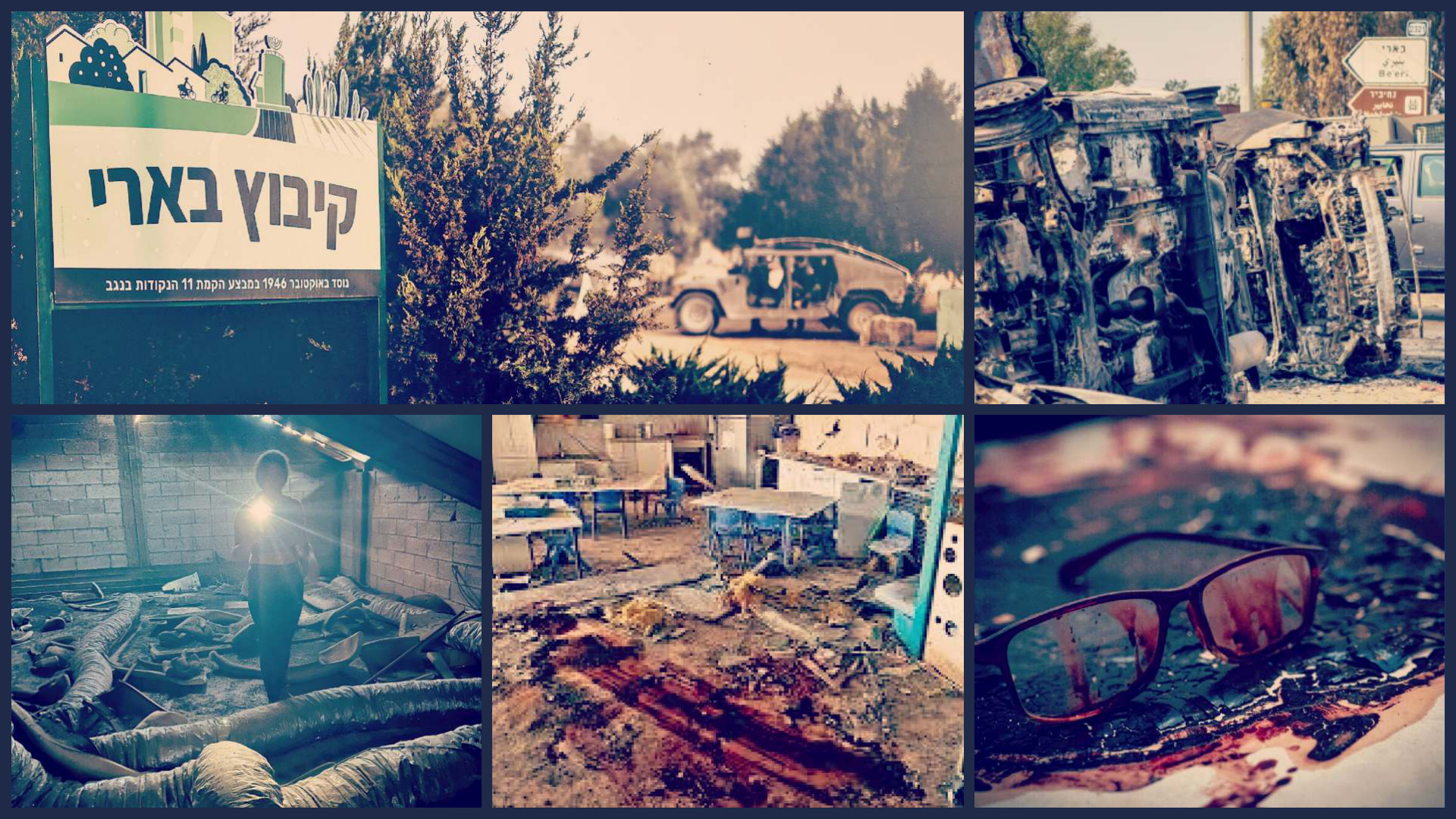
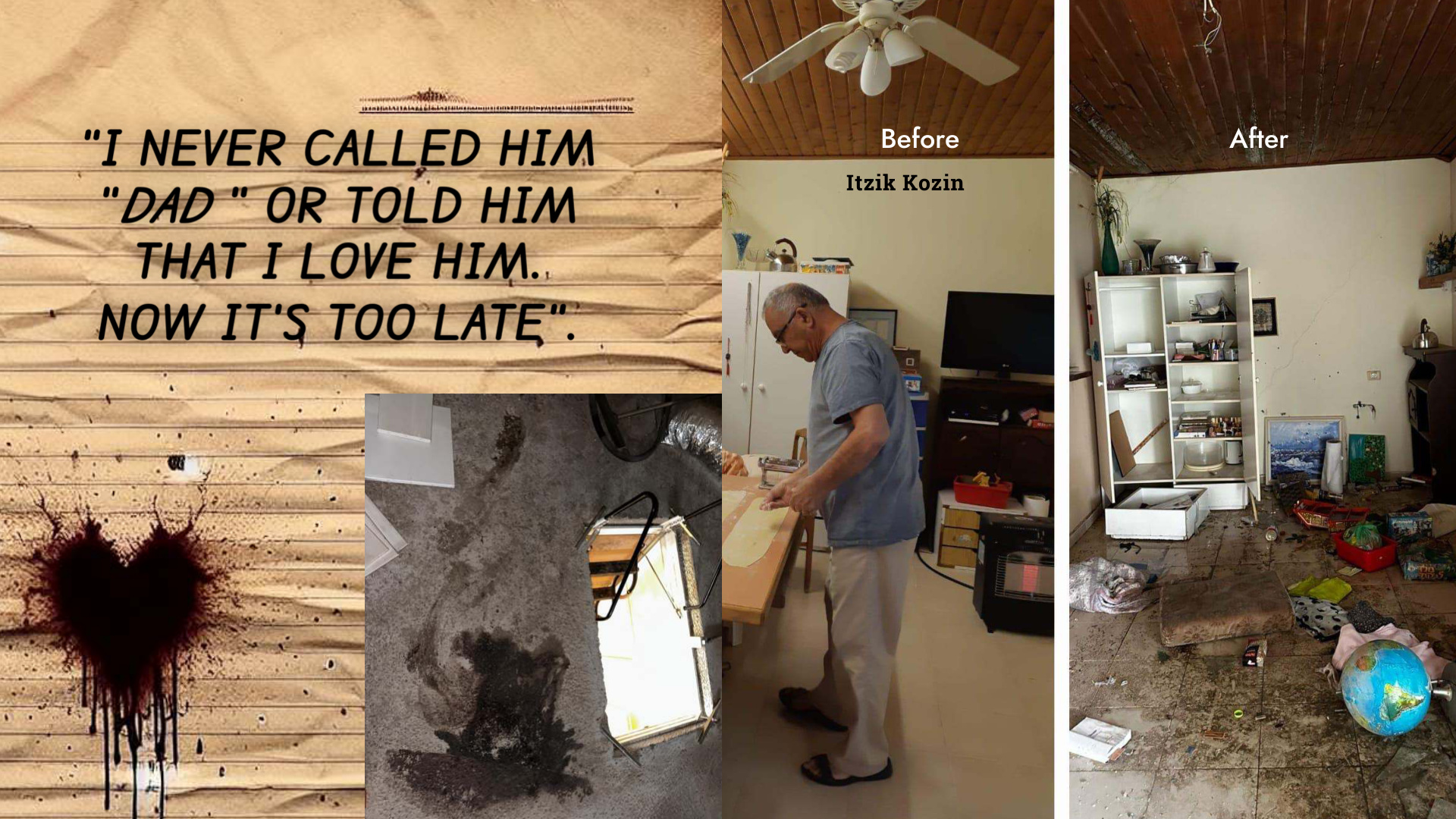
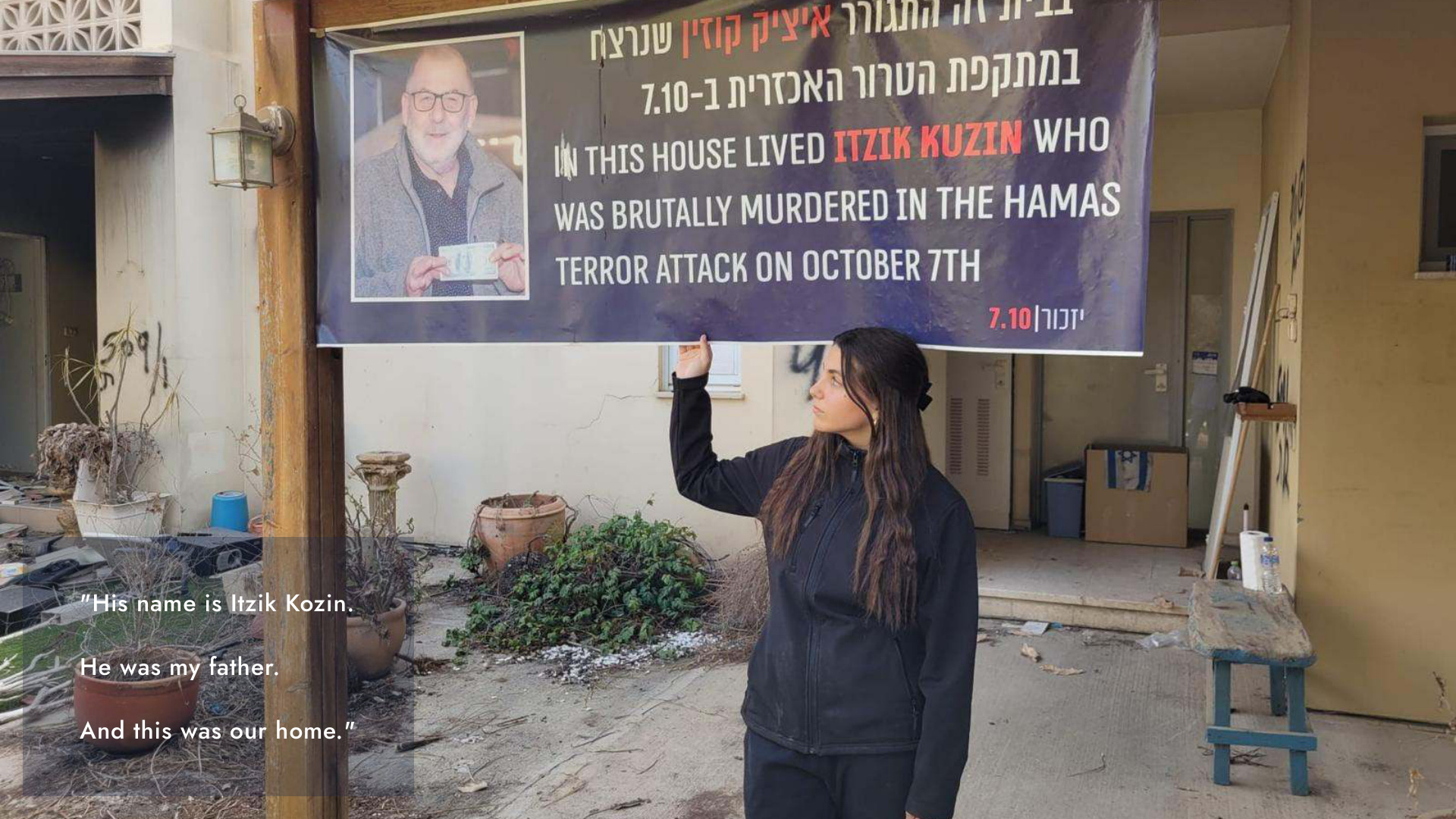
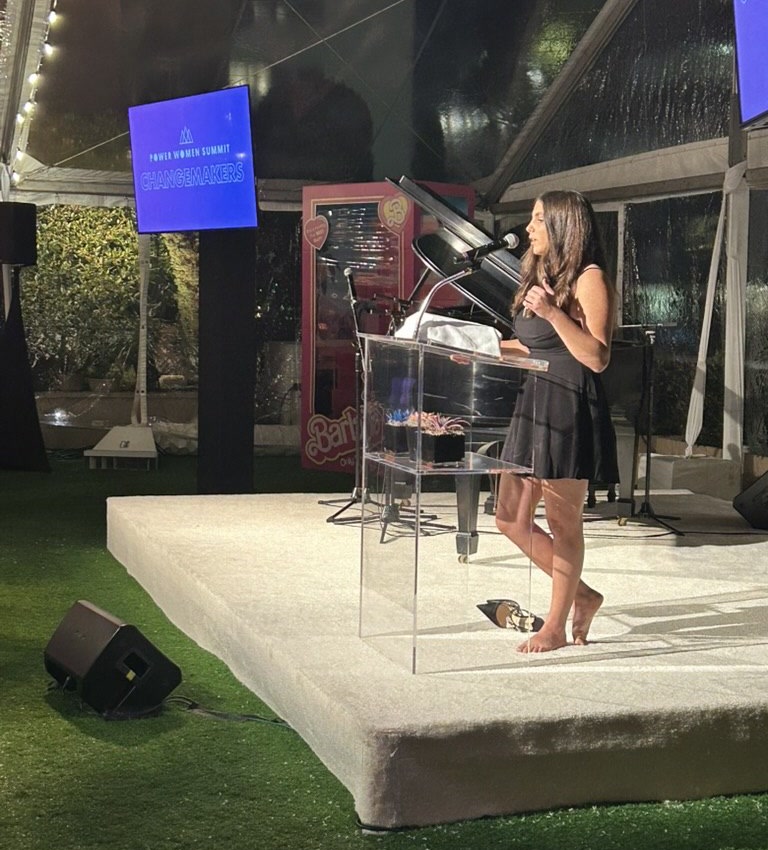
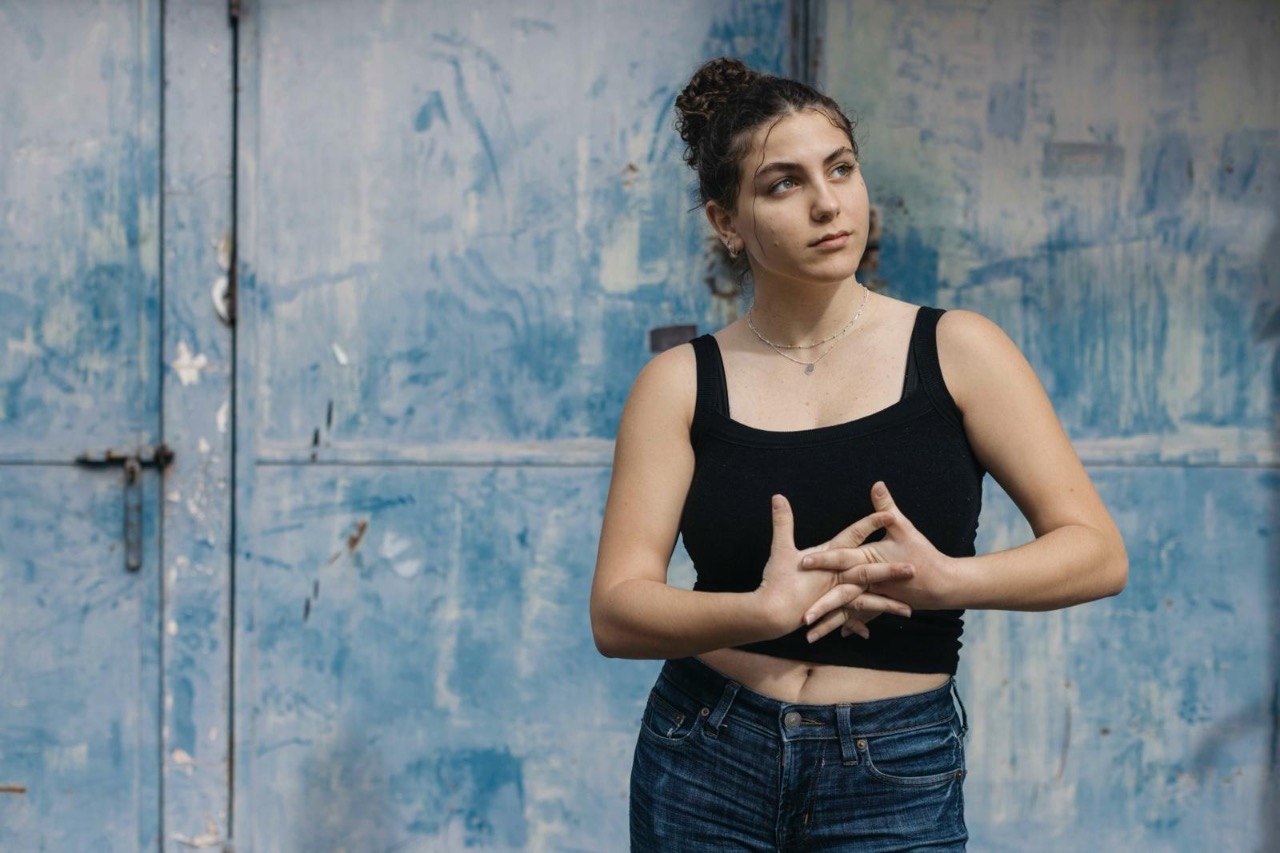
Before October 7, 2023, Ela Shani Kozin was a fourteen-year-old girl living in Kibbutz Be'eri, a small community in southern Israel, less than five kilometers from the Gaza border. On that morning, more than a hundred residents were murdered. Among them was Ela's father, Itzik Kozin. Her sixteen-year-old cousin, Amit, was taken hostage.
Feature Documentary · In Production · 2027 Release
"My name is Ela Shani Kozin.
I was just a girl from Kibbutz Be'eri.
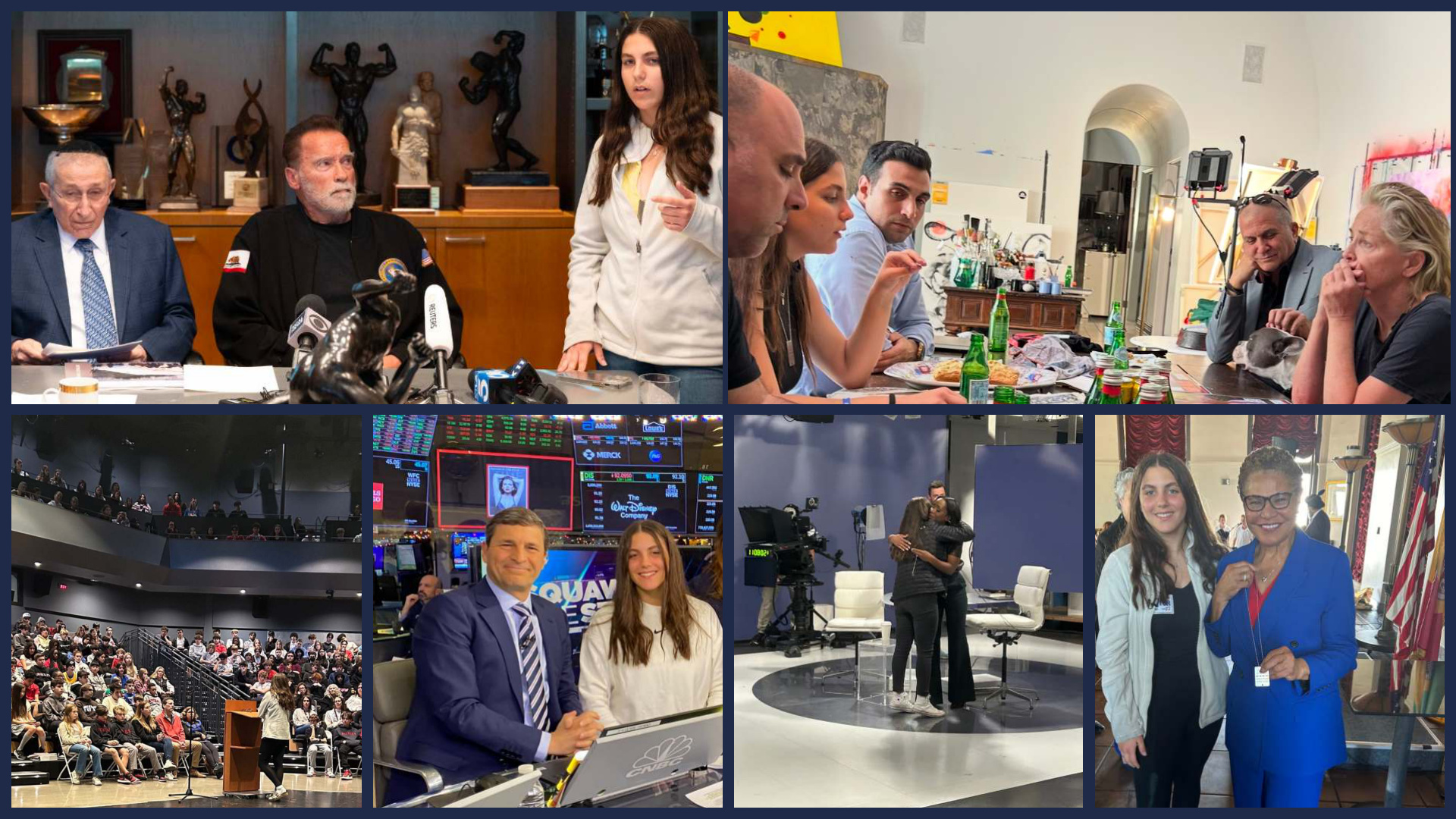
I had never spoken in public before.
But after October 7th, silence no longer felt possible.
So I pressed record.
And suddenly, the world was listening."
The Story
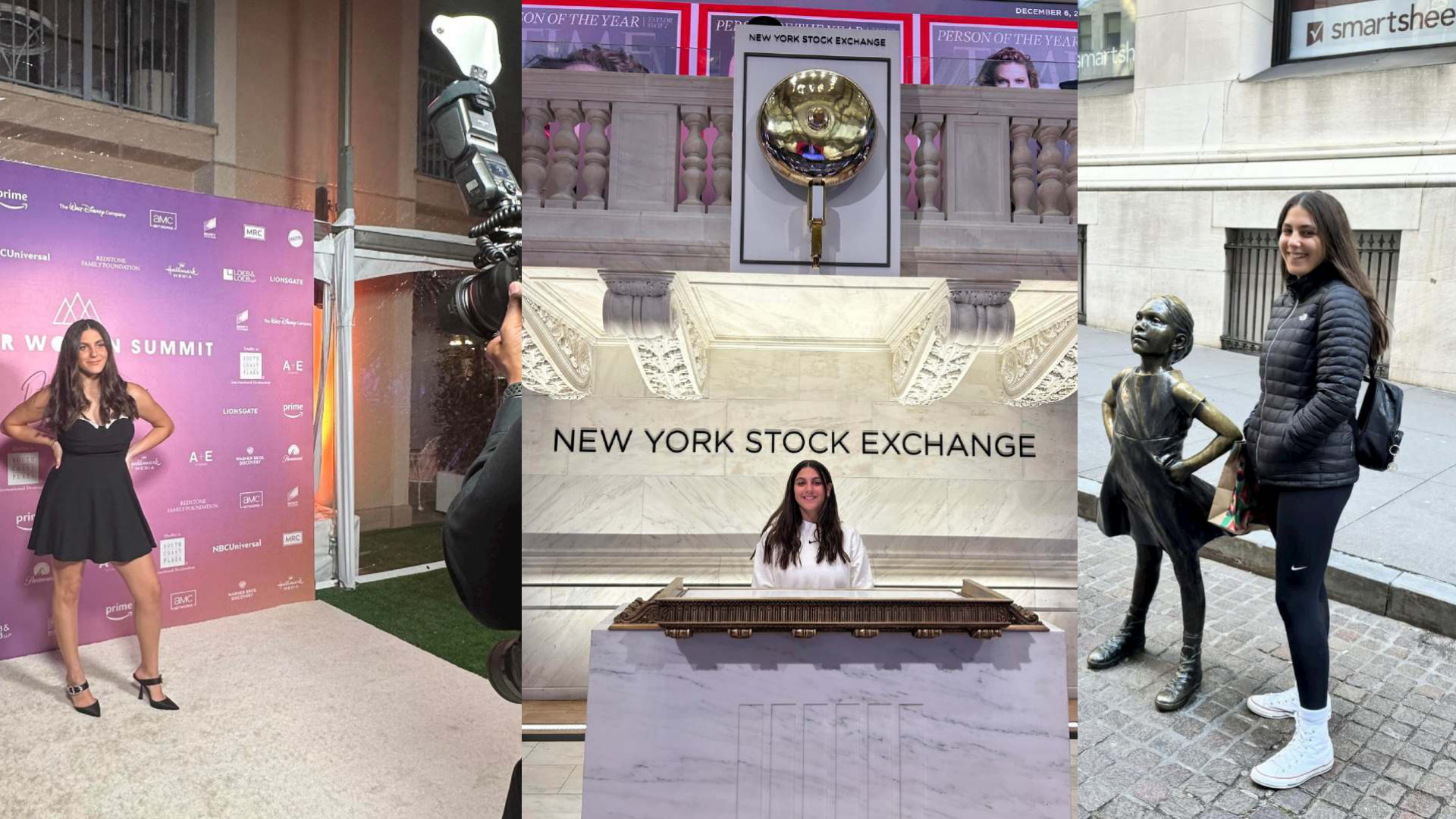
Meeting Ela follows an extraordinary teenager whose instinctive response to tragedy is connection. As she travels with hostage families across the United States and enters worlds far removed from her own, she discovers the power of her voice. The tension between public responsibility and private grief runs through every frame, and the burden of becoming a voice for others while still searching for your own.
As the world around her grows more polarized, Ela keeps reaching out. Even to those who disagree. Ela's journey continues to Europe, retracing her family's history, speaking before leaders in Brussels, and sitting down with young voices who see the world through an entirely different lens.
Underlying the public story is a more intimate one: a daughter coming of age in the shadow of an unfinished relationship with the father she lost. Through memories, longing, and an ongoing inner dialogue with the man who is gone, Ela slowly begins to know her father, and herself, more deeply.
What begins as a fight to bring her cousin home evolves into a deeper search for identity, belonging, and meaning. Death interrupted their relationship, but did not end it.
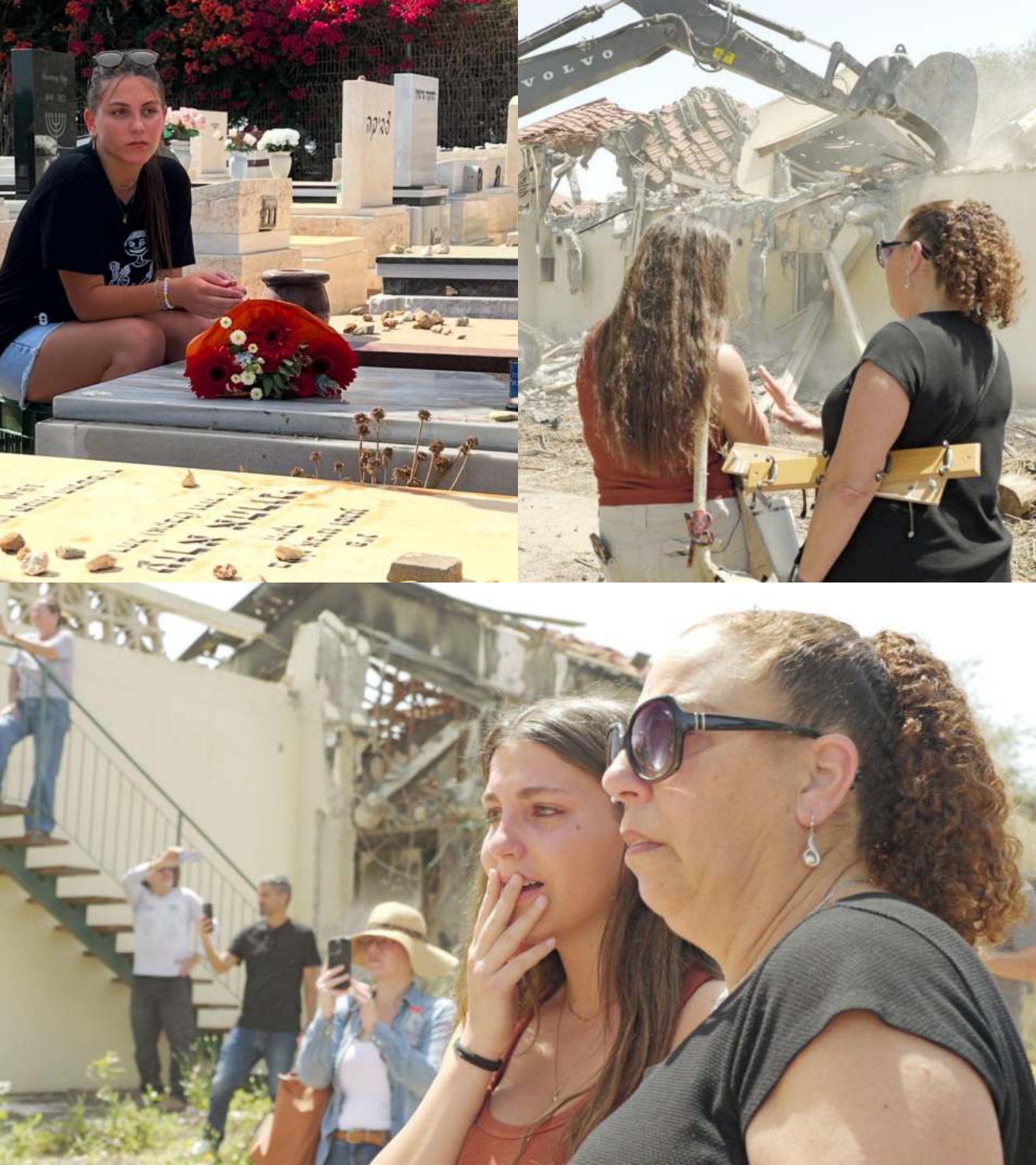
The following images depict the aftermath of October 7.
"My dad is not coming back.
And my friends are not coming back.
But Amit can come back."
TLV→LA→NY→Europe
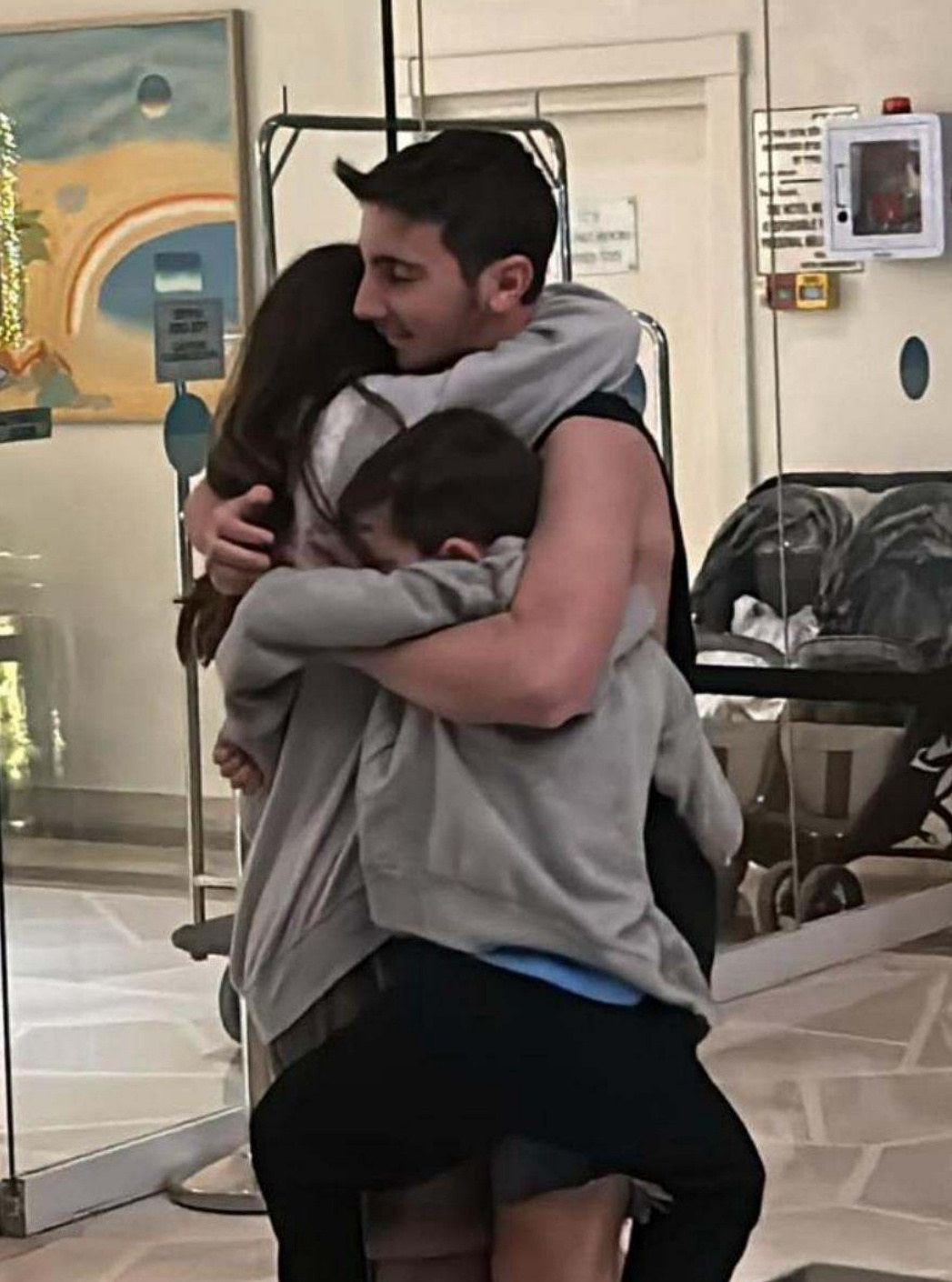
"After fifty-four days in captivity,
Amit came home.
It was a huge relief.
And for the first time in weeks,
we could finally breathe."
"Two years have passed.
The war drags on.
I am seventeen now,
and everything is different.
As I continue sharing my story, I discover parts of the world I wasn't prepared for.
The anger. The certainty. The feeling that people have stopped listening to each other."
"Somewhere along the way, I realize how little I understand.
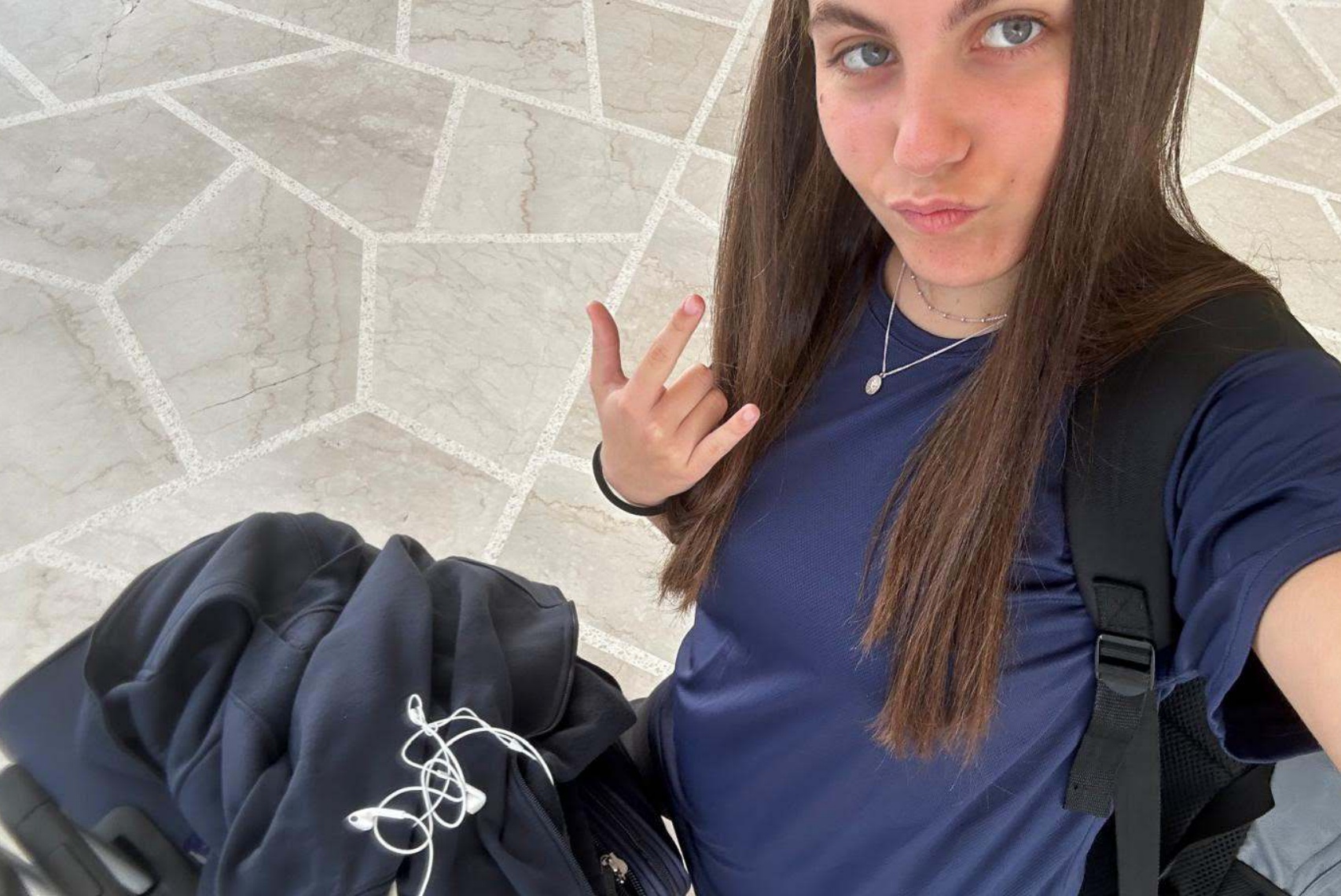
So I pack a suitcase. Again."
TLV → EUROPE...
Artistic Vision
Meeting Ela is shaped by the tension between public visibility and private interior life. The film's artistic vision is rooted in proximity, duration, and emotional accumulation, allowing the viewer to experience Ela's world from within.
The camera stays physically and emotionally close to Ela. Handheld cinematography, natural light, and eye-level framing create a sense of shared presence. Faces, gestures, pauses, silences, and small details are privileged over spectacle.
Voice messages, WhatsApp texts, family footage, archival images, and digital traces are woven into the present tense of the film as fragments of an unfinished relationship. Through them, Ela's father remains present in the cinematic space.
Sound design is central to the film's subjectivity. Ela's voice, breath, pauses, and direct address shape the rhythm. Silence holds space for what words alone fail to carry.
The film holds together history and intimacy, a diary awakening to the world around it.
Industry Response
"Meeting Ela understands that its greatest subject is not the war, but the girl herself."
Rabinovich Foundation for the Arts
"Ela emerges as a powerful cinematic character, capable of carrying a feature-length film. The emotional and narrative potential of the project is exceptional."
Makor Foundation for Israeli Films
Beyond the Screen
Ela's story doesn't end when the camera stops rolling. We want to bring her journey into classrooms, community centers, and faith spaces, sparking the kind of honest, difficult conversations she keeps seeking. If you are interested in hosting a screening or partnering with us on this work, we'd love to hear from you.
Fund Applications
Meeting Ela has been submitted to eight international documentary funds and is currently awaiting responses.
55 shoot days across Israel and the United States. Ela's advocacy journey, public appearances, and intimate family moments.
Summer–Fall 2026: Final Chapter
Filming Ela's final year of high school, her journey to Europe to retrace her family's history, and conversations with young people whose worldview differs profoundly from her own.
Fall 2026–Winter 2027: Edit
Story development, rough cut, fine cut.
Spring 2027: Post-Production
Sound design, original score, color.
Mid–Late 2027: Festival Premiere
International festival premiere and release.
Support the Film
Meeting Ela is in its final stage of production, seeking completion funding to finish filming and enter post-production. All contributions are tax-deductible through our 501(c)(3) fiscal sponsor.
What Your Support Makes Possible
The final act of the film follows Ela's journey to Europe, where she traces her family's history, delivers a powerful speech in Brussels, and seeks dialogue with those whose worldview stands in direct opposition to her own, including pro-Palestinian student groups and a potential encounter with Greta Thunberg.
At the heart of this chapter is Ela's determination to build bridges and find human connection, even with people who see the world differently than she does. Your support funds the completion of these crucial scenes and carries the film through post-production to festival release.
Giving Levels
Friend of the Film
$500+
• Special Thanks credit in the film
• Behind-the-scenes production updates
• Digital screener link before public release
Producer Circle
$5,000+
• Associate Producer credit
• Invitation to the world premiere screening
• All previous tier benefits
Executive Producer
$25,000+
• Executive Producer credit
• Private meeting with the filmmaking team
• VIP access to festival screenings & events
• Name featured on the film's website
• All previous tier benefits
Impact Partner
For foundations, organizations, and individuals seeking a deeper involvement in the film's journey and impact campaign, we welcome a personal conversation.
Fiscal Sponsor
US Forum for Israel 501(c)(3) · EIN: 93-4071343
Tax Status
All contributions are fully tax-deductible under U.S. law
We'd love to hear from you. Use the form below or email us at info@meetingela.com
Director’s Statement
I did not expect this film to become so personal.
I began filming Ela believing I was documenting an extraordinary young girl. Over time, I realized I was also confronting my own questions about grief, identity, and the relationships that continue to evolve long after the people we love are gone.
Having experienced profound loss of my own, I recognized parts of myself in Ela's journey. It allowed me to approach the film as someone listening from within.
Meeting Ela is, at its core, a question of identity: who do we choose to become when everything we knew has been shattered? I believe the answer lies where Ela keeps finding it, in compassion, in the willingness to stay open, and in the quiet courage to reach toward others even when the world tells us to turn away.
– NOA GOREN ZAHAVI
Key Creative Team
Noa Goren Zahavi
Director, Writer & Producer
Israeli-born actress, voice artist, writer, and filmmaker based in Los Angeles. After a successful career in theater and more than a decade of voice work for major studios including Disney, Warner Bros., and Pixar, she shifted her focus toward original storytelling and filmmaking. Following October 7, she co-founded US Forum for Israel. Meeting Ela is her first feature documentary.
Tal Yaari
Producer
Israeli filmmaker, editor, and writer with extensive experience across documentary films, factual television, commercials, music videos, and scripted content. Has collaborated with leading Israeli production companies and networks, contributing to award-winning documentary projects. On Meeting Ela, he serves as producer, bringing extensive experience in story development and production.
Stav Ozdoba
Consulting Editor
Born and raised in Israel, where he served in the IDF's Communication Film Corps. He moved to Los Angeles at 22 to pursue filmmaking. Independent producer Scott Rosenfelt produced his first feature, Final Draft, which screened at the Victoria, Orange County, and Jerusalem Film Festivals and drew strong reviews in Variety and Filmmaker Magazine. He co-wrote and co-directed a second feature starring Craig Ferguson, Joe Morton, and Andy Richter, distributed internationally and aired on Showtime. His short film Dandelions won Best Short Film at the Harlem International Film Festival. He sharpened his editing craft at Sony Pictures before founding Rubber Sole Creative, a senior-led post-production studio in Los Angeles creating trailers and content for major studios and streamers, with industry awards including Clios, GTAs, and GEMAs.
Sharon Levi Doron
Story Consultant
Israeli filmmaker, producer, and director with over two decades of experience in documentary and television. Her documentary film Miseder Ad Seder won an award at the Haifa International Film Festival. Her credits span Israel's major networks, including work for Channel 2, Channel 10, Educational Television, and Yes Docu. She took part in the feature films Mabul (The Flood) and The Son of God, and produced the post-production of the documentary God and I. She holds a degree in Behavioral Sciences from Bar-Ilan University and studied film and television at the Jordan Valley Academic College.
"If I can turn one person into a caring, loving human being, then I deserved to survive."
A young survivor of Majdanek From Death: The Final Stage of Growth by Elisabeth Kübler-Ross
Be Part of This Story
For inquiries, partnerships, or to learn more about supporting the film.
Stay Updated
Get production updates, screening announcements, and behind-the-scenes content delivered to your inbox.